
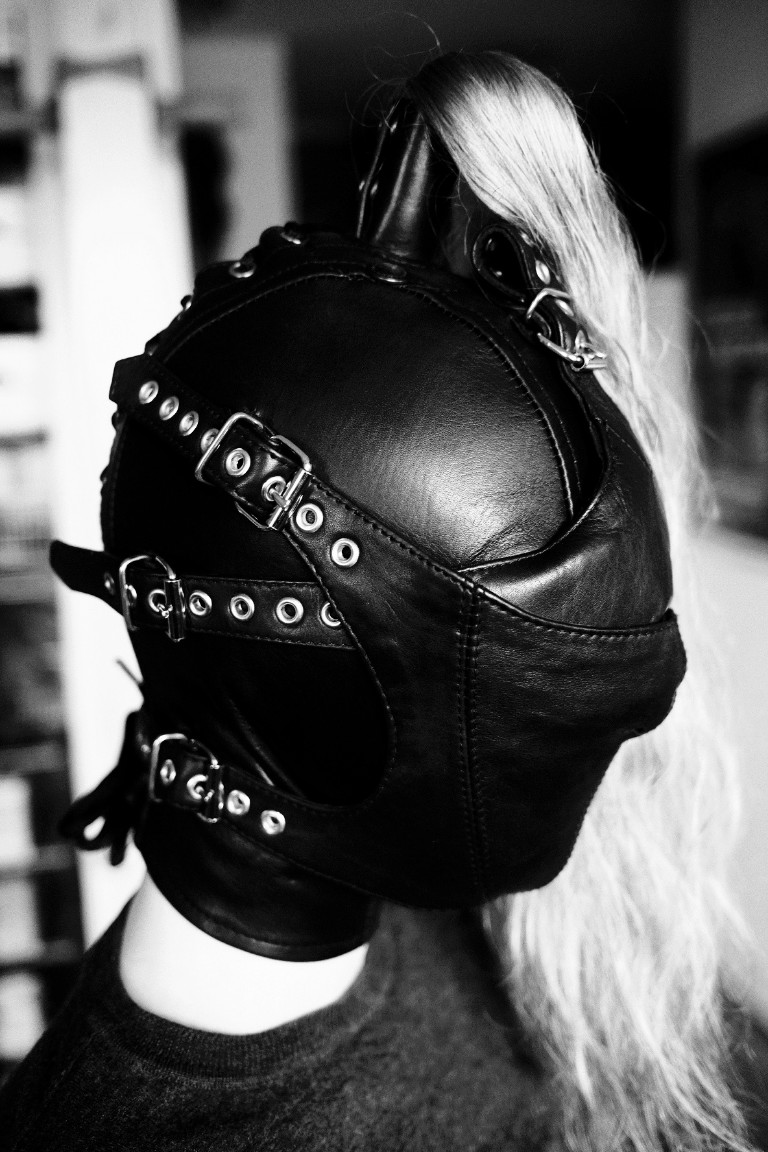
I have created various play spaces over the years, including dedicated and overambitious parties that required hundreds of hours of planning and preparation, focused rituals that used repetition and protocol to direct attention, and erotic temples that guided communal ‘energy flow’ with suggestive music and a hypnotic voice. Sometimes, I blended elements of these different types of experiences to shape what I call an in-between space, an alternate reality for participants to explore. However, there is another approach that I find equally compelling: helping people shape themselves into symbols.
A similar example is traditional fetish parties, where attendees are informed of the materials, uniforms, or styles that are welcomed. One of my first erotic experiences of deviance was at the Scandinavian Leather Men (SLM) club, where they very clearly explained what kind of men they wanted, such as the rubber gimp, the military man, the sports jock, the schoolboy etc. Each type had its dress code, with some parties being beginner-friendly and others requiring a more extensive wardrobe. These dress codes serve as a filter to decide who fits in and who doesn’t, to see who belongs to what lifestyle, community, or subculture. However, adhering to the dress code also changes one’s sense of self, if one allows that to happen. This, I find most fascinating.
I remember a friend in Berlin receiving a sixteen foot kangaroo leather whip for his birthday from his wife. It was made with the finest craftsmanship and probably cost at least 500 euros. But it’s also an incredibly hard tool to master that requires lots of training and physical space (because it’s so long). It also cannot be used every day because the experience is harsh, and the bruising can take weeks to heal. Using this whip is therefore somewhat of a ritual. It also interests me from a consent point of view because it becomes hard to back out from when the occasion is so unique—a little bit like running a marathon. I have another memory of a similar whip being used, also in Berlin, in an underground catacomb. A naked body tiptoeing, hung by the wrist. When the whip cracked, the sound exploded in space, echoing off the walls and stunning the surrounding audience into awe. Here we witnessed how an object can alter the people and space around it.
An Object Of The Gods
This is what happens when an object becomes a fetish. Mythologically, a fetish is an object of the gods. Therefore, it is often forbidden to be used by mere mortals. Only to be worshipped. Its only function is to change who you are. Or in spiritual terms, it becomes deprived of its human function and becomes an instrument which puts you into contact with god.
In psychology, fetishism refers to a sexual attraction towards inanimate objects or body parts that are not typically considered sexual. Examples include shoes and feet. For it to be considered pathological, the fetish must be necessary for sexual function. However, it’s common to use the term ‘fetish’ to describe a casual obsession with a material, such as leather or latex. In my opinion, the term ‘kink’ is a more accurate description in this case.
Pathological fetishism can be viewed from a mythological perspective as the object depriving the individual of their ability to connect intimately, engage in sexual activity, and reproduce. Instead, the fetish becomes the focus of a god-like relationship that includes spiritual, sadomasochistic, and erotic elements. This may include submitting to an object or even becoming the object oneself, such as by fully enclosing oneself in leather.
Becoming A Communal Object Of Worship
A fetish party could be seen as a communal act of worship, similar to dancing together to techno beats while dressed in latex and sliding oh-so-closely together on silicone lube and sweat into an ecstatic state.
So when preparing for a ritual or a play scene, I think the primary focus should be on allowing the clothing, toys and symbols to transform who you are, much like the architecture of the space is designed to do. In spiritual circles, this is often referred to as creating sacred space. It’s an invitation to slow down and feel the transformation happening. This is what people envision when they enter the Eyes Wide Shut party – the top fantasy – putting on a Venetian carnival mask and becoming a godly and mysterious lover for the night. However, fetishes can also limit the possibilities for interaction. That’s the point – they both force and guide. When I put on the thigh-high leather boots, I can no longer make pancakes at home. Of course I could, but then it would be a bizarre comedy scene, just like if my friend were to bring out the sixteen feet kangaroo leather whip, then cuddling would be off the radar. This makes the fetish both a dedication and an obsession.
In a play space, when people dress in designed outfits and select symbolic items, it changes how they form relationships because they see each other in a different way. This creates a symbiosis and an awareness that must be cultivated – how one sees oneself, relates to others, and places oneself in space. When I enter a play space, I enter as someone else. Maintaining everyday social relations doesn’t fit because the person in a play space is different from their everyday persona, like Andy, the reader of books, connoisseur of hot saunas and fine coffee.
I think one should cultivate this skill of ‘being fetish’ by collecting and selecting things based on how they affect one’s identity. Can a whip be both ‘a toy’ and a fetish object simultaneously? I don’t know. According to my friend with the kangaroo leather birthday present, the more he mastered that whip, the more and more it became a casual item, just another instrument in his toy bag. In ritual magick, there is a concept of charging items of magical use to give them meaning, make them unique, and turn them into a fetish – not of the gods, but of one’s own fantasies and desires.


