
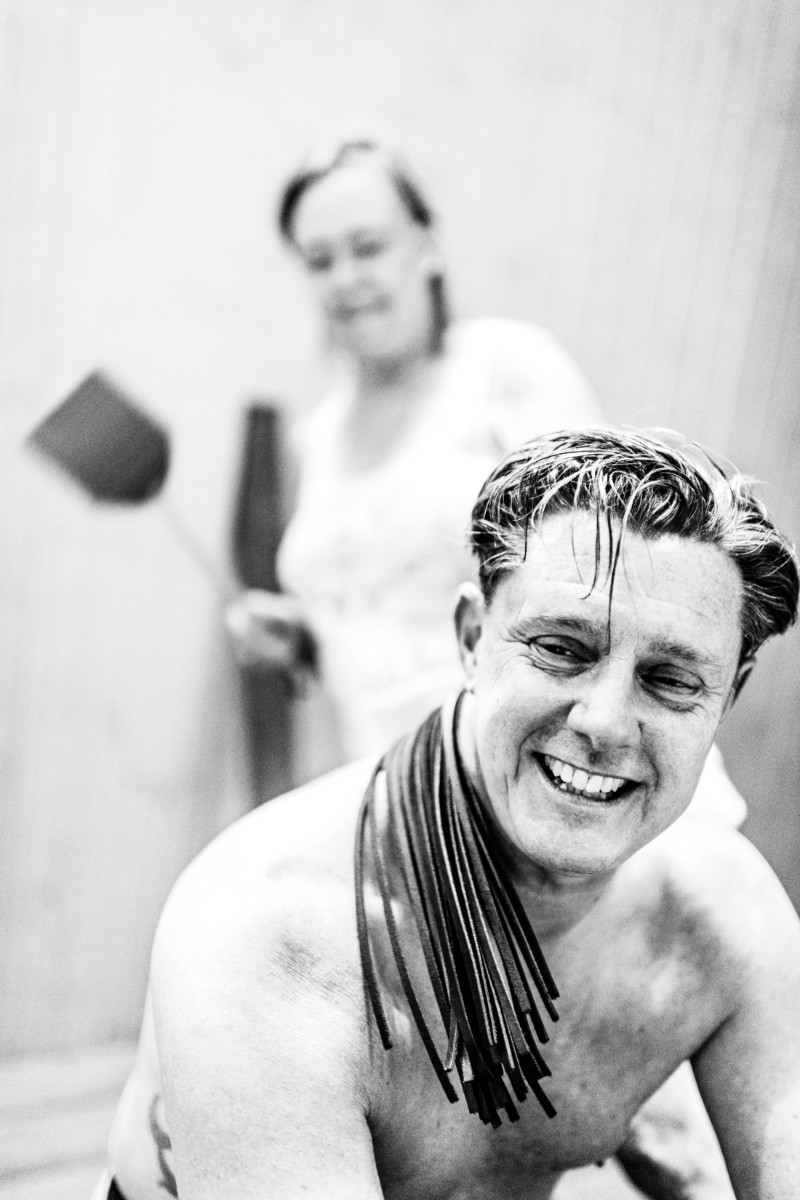
Pain is both personal and relative. Personal because it is subjective. No one can ever feel your pain. They can empathically imagine your experience but never actually feel it. In this way, we are all utterly alone in the end. But it is also relative because how we experience pain is greatly influenced by its source. Therefore the relationship between the dominant and the submissive is fundamentally essential to one’s experience of pain. Pain can be both a selfish expression of power, as well as holding space. In my search to understand pain I have discovered three archetypical pain relationships.
Pain As A Reward
First, pain can be related to as a reward. In this type of exchange, the pain is never scary, it is seen as a service, and it can end up a rollercoaster ride to an endorphin high. It is something welcomed, and can even aid in deeper relaxation and tension release. Anyone can enjoy this kind of pain if it’s administered slowly enough, just like a firm massage. Impact usually moves gradually from light sensations to faster and heavier.
The dominant’s role with regards to this archetype is interesting as they actually don’t need to be very dominant at all. They are mainly providing a service. There can be an ego rush to becoming so skilled in flogging that one becomes popular in the subculture. These dominants will definitely be called up a lot, but it can also be draining, and oddly empty of a fulfilling rush of power.
This kind of play is more efficient if the submissive tilts toward surrender, where it’s more about their experience, rather than submission, where the dominant’s desire is what is mainly in focus. Intent is essential to understand from the start in each of the pain relationships, but especially the next two which get more complicated.
Pain As A Challenge
Next is using pain as a challenge, a way for the dominant to find the edges of the submissive’s comfort zones. The main drivers are curiosity for and satisfaction with sadistic tendencies. I love placing my partner in predicament bondage, where they must fight to endure my ropes. A predicament is when the submissive is forced to choose between two different sources of pain. For example, when suspended mid-air with only the tippy toes touching the ground, there is a choice between relaxing the entire body weight into the ropes, causing more pressure onto the body, or pushing with the toes to take some weight away. However, the calf muscles will get increasingly exhausted, resulting in a burning, painful sensation. Push with the toes or relax into gravity? The choice is the predicament. Burning or crushing pain? The mind also weighs whether the other option would be a little easier. Never really being able to surrender to the experience.
Therefore, the point is to continually emphasise the helplessness of the predicament by not letting the submissive float away into their bubble of surrender but to remain present with me in their submission. Many submissives say that they could surrender to almost anyone because what they want is the physical sensation, however submission is a much more personal experience and often relegated to a select number of partners. The pain relationship is a highly personal one because who the dominant is plays a crucial role in the outcome of the experience.
The challenging pain must not be slowly escalating to give the submissive a smooth ride. But if the dominant moves too fast, they will reach the edge quickly, and the play will be short. Instead, I recommend slowly approaching the edge and seeing how many details there are to learn. For example, exactly which muscles between what ribs are needed to get enough air or precisely how hard to trap a calf to still allow the leg to take weight will give the most excruciating pain—allowing the bondage to be delicate and detailed.
Challenging and rewarding pain can sometimes overlap, and it is possible to switch between them. This way we let the submissive balance the intensity between salvation and despair. The reward can be surrender but also simple pleasure. The reasons for this differ; some people with an erotic focus on sadomasochism need sexual stimuli. Erotic masochists confuse pain and pleasure during high arousal in the nervous system while most people find that pleasure simply makes pain more bearable. Of course, they also mix and overlap as well.
Most important to remember while exploring challenging pain is that this is done primarily for the dominant’s satisfaction. Therefore, asking the submissive if this, the sensation of pain, is enjoyable or not will instantly destroy the fantasy. An alternate question, one which maintains the fantasy, could be, Do you enjoy suffering for me? In my experience, they must find their satisfaction in the curiosity of the dominant—in wanting to submit. This is often more challenging for a dominant because they need to own that this is their desire and that they are no longer simply providing a service.
Pain As A Punishment
Finally, the third type of pain relationship is punishment, a reaction to the submissive for breaking a rule or misbehaving. Of course, it is part of a consensual and conscious play—the goal is to give pain that is not enjoyable, which is the opposite of rewarding pain. So if the reward is slow, safe, in harmony with the submissive breath, punishing pain is fast, scary, and unpredictable – one which avoids surrender. It is critical to make it unmistakable whether or not the pain is punishment or reward. I can’t stress the importance of this enough. If the aim is to make it rewarding, but the submissive interprets it as a punishment, there is trouble brewing. First of all, likely, they will not enjoy the pain because of the emotional structure around being punished. They will think they did something wrong when there was no fault. And the dominant will likely feel like a failure when a rewarding effort is received as the opposite. The intimacy will then deteriorate and with that, also the trust. The other way around is not as problematic—when the submissive perceives a punishment as a reward. In this case, they will simply not learn from their mistakes and become more likely to repeat them. In the long run, this will undermine the power dynamic.
There is one other concept, that of ‘fun-ishment’, which is to role-play a punishment for fun as a reward. I avoid this unless the play’s intention is clearly comical, like a silly act at a party for laughs. Exploring pain as a reward, a challenge or a punishment is much more attractive – as long as it is clear to both partners what is what.


